Ukraine Calls Reported Libya Ship Attack Self-Defence
Ukraine Calls Reported Attack on Russian Ships Near Libya Self-Defence
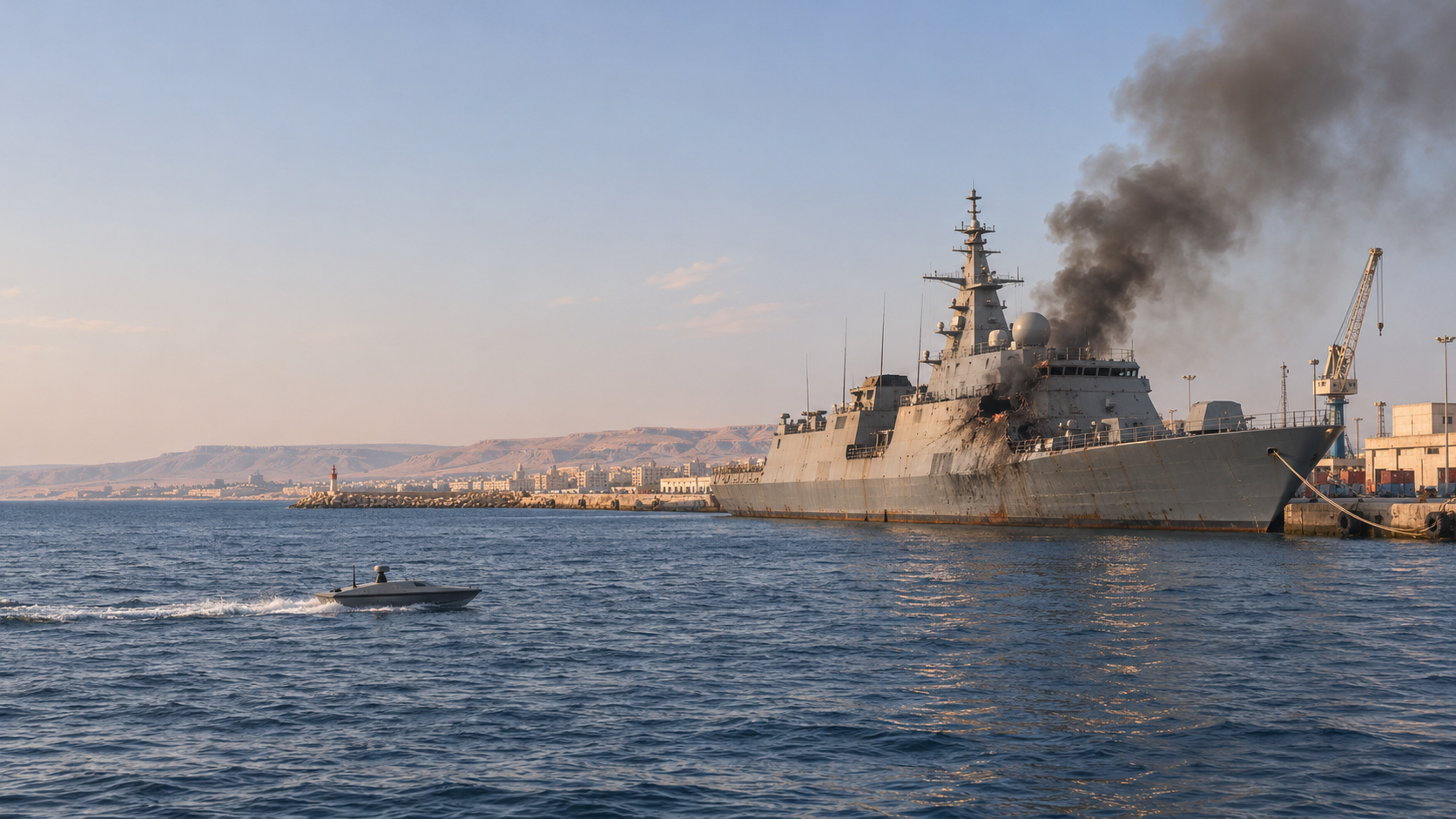
Ukraine reportedly says an attack on Russian maritime assets near Libya was an act of self-defence connected to its war with Russia. The claim has attracted attention because the reported operation occurred far beyond Ukraine’s primary battlefields and may demonstrate the growing reach of Ukrainian naval drones.
The available reports do not establish the incident’s exact date, location, target, damage, casualties or official responses. Some describe an attack on a Russian ship “in Libya,” while others refer to a strike “off Libya’s coast.” That distinction matters because an operation in a Libyan port, inside territorial waters or in international waters would raise different questions about sovereignty, jurisdiction and the use of force.
What Happened?
According to a report by The Globe and Mail, Ukrainian President Volodymyr Zelensky confirmed that Ukraine was responsible for a surprise attack on a Russian warship in Libya Source 5.
Reuters reported that Ukraine described the operation as self-defence Source 1. The Kyiv Independent similarly reported Ukraine’s claim that strikes on a Russian ship in Libya were lawful acts of self-defence Source 3.
These reports support a limited conclusion: Ukraine has been linked to a reported maritime strike involving Russian assets near Libya and has defended the operation as part of its war effort. They do not independently establish whether one vessel or several were targeted, whether the target was a warship or support vessel, or whether the vessel was damaged or destroyed.
Why Ukraine Calls the Attack Self-Defence
Ukraine’s argument appears to rely on the broader Russia-Ukraine war rather than Libya’s internal conflict. Kyiv may contend that Russian maritime assets outside the Black Sea can support military logistics, transport, personnel movements or other operations connected to the war.
That argument depends on evidence. A Russian-linked vessel near Libya could be relevant to Ukraine’s defence if it was transporting military equipment, supporting Russian forces or performing another operational function. Geographic proximity to Russian forces would not, by itself, establish that the vessel was an immediate or lawful target.
Article 51 of the United Nations Charter recognizes the inherent right of individual or collective self-defence if an armed attack occurs United Nations Charter, Article 51. Applying that principle to the reported strike would require answers to several questions:
- Was Ukraine responding to an ongoing or imminent armed attack?
- Was the vessel sufficiently connected to that attack?
- Was the operation necessary and proportionate?
- Did it create unacceptable risks to civilians or neutral shipping?
The legal assessment also depends on the location. An attack in international waters would raise questions about targeting, necessity and proportionality. An attack in Libyan territorial waters or a port could create additional sovereignty concerns, particularly if Libya did not consent.
The Role of Ukrainian Naval Drones
The New York Times reportedly highlighted the extended operational range of Ukrainian naval drones Source 7. If independently confirmed, the operation would show that Ukrainian maritime drones can threaten Russian assets far beyond Ukraine’s immediate coastal waters.
Such systems can expand maritime reach without exposing conventional crews to the same risks. They can also force an opponent to protect wider areas, reinforce ports and improve surveillance. However, the available summaries do not identify the drone model, launch point, navigation route, payload or number of systems used.
Verification should rely on satellite imagery, vessel-tracking data, geolocated video, official statements and assessments from credible maritime specialists. Operational range alone does not prove how the mission was conducted.
Why Russian Ships May Have Been Near Libya
Libya’s central Mediterranean position makes its coastline strategically important for commercial routes, military access and regional competition. Its divided political and security institutions have also created opportunities for foreign involvement.
The supplied reports do not establish the purpose of the reported Russian maritime presence. Possible explanations include logistics, personnel movement, equipment transport, regional military activity or routine naval operations. These remain possibilities, not confirmed facts.
A Russian-flagged vessel, a state-operated warship, a private security-linked ship and a commercial carrier may have different legal statuses and missions. The vessel’s identity and function are therefore central to any assessment.
Implications for Libya
Al Jazeera reportedly examined whether the Russia-Ukraine war could undermine Libya’s fragile reunification process Source 9.
A foreign attack near Libya could expose divisions among Libyan authorities, increase pressure on local security actors to choose sides and create new arguments for foreign military involvement. It could also weaken perceptions that Libya’s authorities can control their territory and waters.
Possible consequences include:
- Increased militarization around ports and coastal infrastructure.
- Disruption to commercial shipping.
- Greater foreign surveillance and military deployments.
- Pressure on Libyan authorities to support one side.
- More difficulty implementing security arrangements between rival factions.
The supplied material does not confirm an immediate Libyan or Russian response. Such claims require direct reporting from the relevant authorities.
What the Sources Establish
The available summaries support these limited claims:
- Reuters reported Ukraine’s self-defence explanation Source 1.
- The Kyiv Independent reported Ukraine’s claim that the strikes were lawful self-defence Source 3.
- The Globe and Mail reportedly said Zelensky confirmed Ukraine’s responsibility Source 5.
- The New York Times reportedly highlighted the range of Ukrainian naval drones Source 7.
- Al Jazeera reportedly considered the potential impact on Libya’s reunification process Source 9.
The following details remain unconfirmed: the exact date and location; vessel identity and classification; damage and casualties; the vessel’s mission; its connection to Russian operations against Ukraine; the drone model and launch point; and the responses of Libya and Russia.
Conclusion
Ukraine reportedly says the attack on Russian ships near Libya was an act of self-defence connected to the Russia-Ukraine war. If confirmed, the operation could demonstrate the extended reach of Ukrainian naval drones and broaden the geographical scope of maritime conflict.
The incident could also create new risks for Libya, including greater pressure on ports, shipping routes and divided authorities. Its legal and strategic significance depends on verified facts: the target’s identity, military role, exact location, weapons used, damage caused and any immediate threat to Ukraine.
Official claims should remain separate from independently confirmed evidence until those facts are established.
Frequently Asked Questions
Did Ukraine confirm the attack?
According to The Globe and Mail, Zelensky confirmed Ukraine’s responsibility. The operation’s exact details remain subject to further verification.
Why did Ukraine call the attack self-defence?
Ukraine reportedly argued that the strike was connected to its defence against Russia’s ongoing war. The legal strength of that claim depends on the vessel’s role, its connection to Russian operations, the location and the proportionality of the attack.
Where did the attack take place?
The supplied reports use different descriptions, including “in Libya” and “off Libya’s coast.” The precise location has not been established.
What role did naval drones play?
The New York Times reportedly highlighted the extended range of Ukrainian naval drones. The available summary does not identify the model, launch point, payload or number of drones.
Could the incident affect Libya’s reunification process?
Yes. A foreign attack near Libya could increase political tension, raise sovereignty concerns and encourage further external involvement.
What facts remain unconfirmed?
The vessel’s identity, damage, casualties, exact location, Russian mission, Libyan response and Russian response remain unconfirmed by the supplied material.
Related Articles
-
 Two Arrested After Suspected Burglary at Royal Norfolk Home
-
 What the Unsealed Ilhan Omar Search Records Show
-
 China Investigates Shanghai Party Chief Chen Jining
-
 Japan Defends ICC Despite U.S. Opposition
-
 Haitian Families Facing Separation at the Canadian Border
-
 Thanksgiving Nor’easter: Rain, Wind, and Travel Risks
-
 Morning Brief: Huang, Iowa Detonation and Hormuz Tolls
-
 Bay Area King Tide Flooding: Road Closures and Updates
-
 Trump Calls for Faster Federal Executions, Criticizes Newsom
-
 Judge Required Safeguards Before Omar Home Search
-
 U.S. Adds Megaspeed to Trade Blacklist Over Nvidia Concerns
-
 San Francisco Sewers Overwhelmed by Intense Rain
-
 Gaza Strike Kills UNRWA Water Worker, Two Others
-
 Ukrainian Drones and the Reported Russian Ship Strike in Libya
-
 What COP31’s Failure Reveals About a Divided World
-
 Pauline Hanson Faces State Election Test Over Debt