Beaver Supermoon: Meaning, Viewing, and Photography Guide
Beaver Supermoon: Meaning, Viewing, and Photography Guide
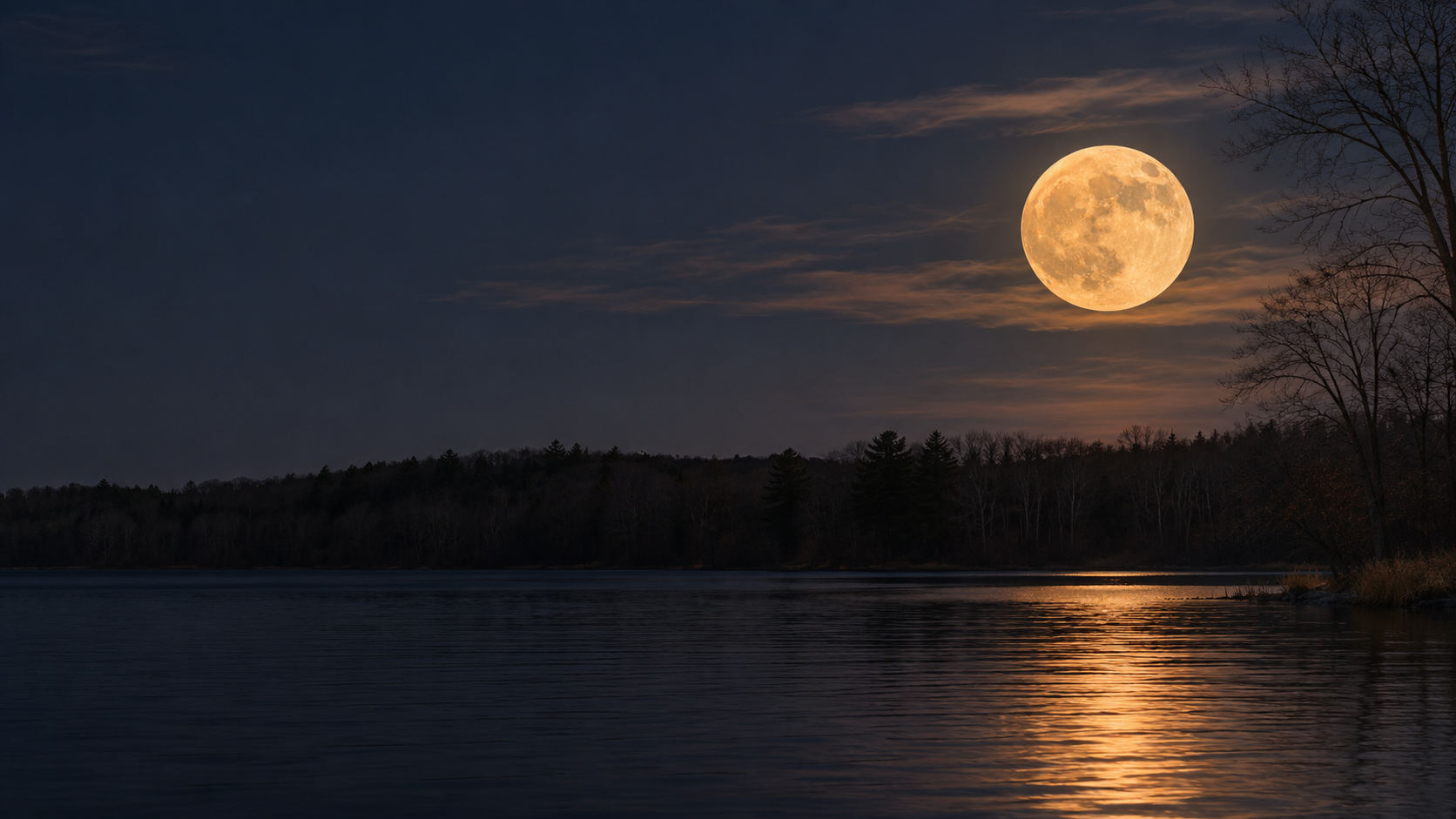
The Beaver supermoon brightened November skies over cities, coastlines, rural landscapes, and historic landmarks around the world. Photographs from the Philippines, the Czech Republic, and other locations showed the Moon rising with a warm orange glow, especially near the horizon.
The event combined two familiar ideas: the traditional name for November’s full moon and the modern astronomical term supermoon. Although the Moon does not become dramatically larger, its slightly closer position to Earth can make it appear somewhat brighter and larger than an average full moon. Atmospheric effects, the Moon illusion, and carefully chosen landscapes can make the difference seem more pronounced.
International photo reports captured the same lunar event from different angles and environments. One report documented the Beaver supermoon over locations around the world Source 1.
What Is the Beaver Supermoon?
The Meaning Behind the Beaver Moon
The Beaver Moon is the traditional name for November’s full moon. The name comes from seasonal traditions in North America, where November historically marked a period when beavers prepared for winter.
Beavers built winter shelters and stored food during this period. November was also associated with setting beaver traps before frozen conditions made access more difficult. The seasonal name reflected both the animal’s behavior and traditional hunting practices.
“Beaver Moon” is not a scientific classification. It is a cultural and seasonal name, similar to other traditional full-moon names. The Moon follows the same orbital cycle regardless of the name assigned to its full phase.
Why It Is Called a Supermoon
A supermoon occurs when a full moon takes place near the point in the Moon’s elliptical orbit where it is closest to Earth. Because the orbit is not a perfect circle, the Moon’s distance from Earth changes during each revolution.
When a full moon occurs near this closest approach, the Moon may appear slightly larger and brighter than a typical full moon. The difference is modest, especially without a side-by-side comparison. It can seem more noticeable when the Moon is photographed near the horizon, where buildings, trees, bridges, or mountains provide a sense of scale.
A supermoon is not a lunar eclipse, blood moon, or blue moon:
- A lunar eclipse occurs when Earth’s shadow falls across the Moon.
- A blood moon usually describes a total lunar eclipse, when the Moon can appear reddish.
- A blue moon refers to a calendar or seasonal definition involving an extra full moon.
- A supermoon describes the relationship between a full moon and the Moon’s distance from Earth.
The Moon does not change size dramatically during a supermoon. Its orbital position creates a measurable but relatively subtle difference.
When Did the Beaver Supermoon Appear?
The November Full Moon Date
Reports described the event as a November full moon occurring on a Tuesday. Coverage from the Prague area reported the supermoon rising on November 24, while other reports focused on its appearance in different parts of the world Source 3 Source 7.
The exact year, full-moon moment, and local viewing time should be confirmed before publication or observation planning. A full moon reaches one precise astronomical moment, but it appears nearly full for several hours before and after that time. Observers in different time zones may therefore see the same lunar phase on different local calendar dates.
Best Time to Watch the Moon
The most dramatic viewing period is usually around local moonrise. The Moon sits close to the horizon, where foreground objects provide scale. Atmospheric conditions may also give it an orange, red, or golden appearance.
The Moon remains visible through much of the night if skies are clear. However, the beginning of moonrise often offers the strongest photographic opportunities because the Moon can be framed against a changing sky and recognizable scenery.
Check a local astronomy app, observatory, planetarium, or weather service for:
- The precise moonrise time.
- Cloud cover near the horizon.
- Visibility and humidity.
- The direction of moonrise.
- Local obstructions such as buildings, hills, or trees.
Arrive 15 to 30 minutes early to choose a safe location, set up equipment, and watch the Moon emerge.
Where the Beaver Supermoon Was Seen
Global Photo Coverage
The Beaver supermoon appeared over different continents and landscapes, showing how one astronomical event can look different from place to place. Weather, haze, light pollution, camera settings, landscape, and moonrise timing all influence the final view.
Photographs can show the Moon above an urban skyline, open fields, coastlines, historic buildings, or mountainous horizons. The Moon is visible from much of Earth’s night side, but local weather and atmospheric conditions determine whether observers see it clearly.
Global photo coverage also demonstrates that the Moon’s appearance depends as much on its surroundings as on its astronomical position. An urban image may emphasize scale and architecture, while a rural photograph may highlight darkness, color, and lunar surface detail.
Pantukan, Davao de Oro
The Beaver supermoon illuminated the evening sky over Pantukan, Davao de Oro, at 6:45 p.m., according to a local report Source 5.
The report identified the November full moon as the Beaver Moon. The observation illustrates how bright the Moon can appear shortly after sunset, when the sky is transitioning from daylight to night.
Prague and the Surrounding Area
Another report described the supermoon rising over the Prague area on November 24 with an orange glow. The image also showed the Moon near a star cluster Source 7.
The apparent proximity between the Moon and a star cluster in a photograph does not mean that the objects were physically close in space. The effect depends on their positions in the sky, the camera lens, and the image composition. Atmospheric clarity and exposure settings can also affect how easily nearby celestial objects are seen.
Why the Supermoon Can Look Orange
The Moon’s Position Near the Horizon
The Moon often appears orange, red, or golden when it is low in the sky. Moonlight must pass through more of Earth’s atmosphere near the horizon than when the Moon is high overhead.
The atmosphere scatters shorter blue wavelengths more strongly. More red, orange, and yellow light can remain visible along the longer path through the atmosphere, producing an effect similar to sunrise and sunset colors.
The Moon itself has not permanently changed color. The appearance results from the interaction between moonlight and the atmosphere along the observer’s line of sight.
Atmospheric Conditions and Local Pollution
Dust, smoke, haze, humidity, and pollution can intensify the Moon’s warm appearance. These conditions may produce vivid orange or red tones, but they can also reduce sharpness and contrast.
A hazy atmosphere may make the Moon look larger or softer in photographs while obscuring fine lunar details. Smoke and pollution can deepen the color, but they may also indicate poor air quality. Check local conditions before spending time outdoors.
An orange Moon is not proof of a lunar eclipse or unusual lunar activity. It is most commonly an atmospheric effect, especially when the Moon is near the horizon.
The Moon Illusion
The Moon illusion makes the Moon appear larger near the horizon than when it is high in the sky. Buildings, trees, hills, and other familiar objects provide visual references that help the eye judge distance and scale.
The Moon’s physical size does not increase above a skyline. The apparent enlargement results from how the brain interprets the Moon in relation to familiar objects.
This effect explains why many supermoon photographs look especially dramatic. A Moon framed between buildings or above a mountain may seem enormous even when the image does not show a major difference in angular size.
How to Observe the Beaver Supermoon
Choose a Clear, Open Location
Choose a location with:
- An unobstructed eastern horizon for moonrise.
- Low artificial light.
- Safe access after dark.
- A clear view away from tall buildings and dense trees.
A dark-sky location improves contrast but is not essential for viewing a bright full moon. Urban observers can often see a supermoon from a balcony, park, rooftop, or open street if the horizon is visible and conditions are safe.
Check Moonrise and Weather Times
Check local moonrise times along with cloud cover, visibility, humidity, and haze. A short gap in the clouds can provide an excellent view, while thick cloud near the horizon may hide the Moon during the most dramatic part of moonrise.
Use a reliable astronomy app or local observatory listing to identify the Moon’s rising direction. Weather services can help determine whether clouds or haze will affect visibility.
Do You Need a Telescope?
No special equipment is required to see a supermoon. The unaided eye provides the widest view and makes it easier to appreciate the Moon alongside the landscape.
Binoculars can reveal more lunar features, including large dark plains and brighter cratered regions. A telescope can show additional detail but is not necessary for enjoying the event.
Never look at the Sun through binoculars or a telescope without a properly designed solar filter. Ordinary full-moon viewing is safe, but solar observation requires specific equipment and procedures.
How to Photograph the Beaver Supermoon
Use a Smartphone
A smartphone can capture an effective supermoon image with careful preparation:
- Clean the camera lens.
- Place the phone on a stable surface or tripod.
- Tap the Moon to focus.
- Reduce exposure so the lunar surface is not overexposed.
- Use a timer to prevent movement when pressing the shutter.
- Include a building, tree, bridge, or other foreground object.
Digital zoom can reduce image quality. If possible, capture a wider image first and crop it later. The Moon is much brighter than the surrounding sky, so automatic exposure may turn it into a featureless white disk.
Use a Digital Camera
A digital camera with a telephoto lens can capture sharper lunar detail. Manual or semi-manual control over shutter speed, ISO, focus, and white balance provides more consistent results.
The Moon is bright, even at night. A relatively fast shutter speed and low ISO can preserve surface detail. Manual focus set near infinity may help, although photographers should inspect test images and adjust as needed.
Take several exposures as the Moon rises. Its brightness can change against the darkening sky, and haze near the horizon may require different settings later in the evening.
Frame the Moon With a Landscape
Landscape elements provide context and scale. Consider framing the Moon with:
- A city skyline.
- A bridge.
- A historic building.
- Trees.
- Mountains.
- A coastline.
- A recognizable local landmark.
Astronomy and mapping apps can help predict where the Moon will rise relative to a landmark. Planning matters because the Moon moves through the frame quickly, and ideal alignment may last only a few minutes.
Avoid Common Photography Mistakes
Do not rely entirely on automatic exposure. The camera may expose for the dark sky and overexpose the Moon.
Avoid excessive digital zoom, which can create a soft or pixelated image. Photographing through a dirty window can introduce reflections and distortion. If a window is unavoidable, clean it and turn off nearby indoor lights.
Capture test images before moonrise, confirm the composition, and adjust quickly as the Moon appears.
Beaver Supermoon Versus an Ordinary Full Moon
What Observers May Notice
A supermoon may appear slightly brighter or larger than a typical full moon. The difference is difficult to identify without side-by-side images or accurate measurements.
The visual impact often comes from a combination of factors:
- The Moon’s closer orbital position.
- Its low position near the horizon.
- Atmospheric color.
- The Moon illusion.
- Foreground objects in the landscape.
- Camera composition and exposure.
The event’s appeal comes from both astronomy and visual context. Even observers who cannot detect the size difference can enjoy the bright full Moon and its changing appearance through the night.
What Does Not Change
The Moon’s phases still follow the normal lunar cycle. A supermoon does not automatically create a lunar eclipse, and the Moon does not become dramatically larger.
Tides may be somewhat stronger around a full supermoon because the Sun, Earth, and Moon can create stronger tidal effects at particular alignments. The effect varies by location, coastline, weather, and other tidal factors.
What Comes After the Beaver Supermoon?
A Broader Season of Lunar Events
One report described the November supermoon as the beginning of a four-month celestial spectacle Source 9.
That description may refer to a sequence of notable lunar or astronomical events rather than a continuous period of supermoons. Verify subsequent event dates for the relevant year before presenting them as a schedule.
Skywatchers can follow:
- Monthly full moons.
- Meteor showers.
- Planetary conjunctions.
- Lunar eclipses.
- Major space missions.
- Close approaches between the Moon and bright planets.
Why Seasonal Skywatching Matters
Regular Moon observation helps viewers notice changes in its position, color, and relationship with the local landscape. Watching the Moon at different times also shows how its rising point shifts along the horizon during the month.
The Beaver supermoon provides an accessible introduction to astronomy. It requires no specialized equipment, can be viewed from urban and rural locations, and offers opportunities for both casual observation and advanced photography.
Key Takeaways
- The Beaver Moon is the traditional name for November’s full moon.
- A supermoon occurs when a full moon takes place near the Moon’s closest approach to Earth.
- The Moon may appear orange near the horizon because its light passes through more of Earth’s atmosphere.
- Reports documented the event over Pantukan, Davao de Oro, and the Prague area.
- No specialized equipment is needed to view a supermoon.
- Clear weather, a broad horizon, and accurate moonrise times matter most.
- Foreground landmarks can make supermoon photographs more dramatic.
- Confirm the event year, full-moon time, and local viewing times for each location.
FAQ
What is the Beaver supermoon?
The Beaver supermoon is November’s full moon occurring near the point in the Moon’s orbit when it is closest to Earth. “Beaver Moon” is the traditional seasonal name, while “supermoon” describes the Moon’s orbital position.
Why is the November full moon called the Beaver Moon?
The name is linked to seasonal beaver activity and traditional trapping practices in North America. Beavers were preparing for winter, and November was historically associated with setting beaver traps.
When is the best time to see the Beaver supermoon?
The best time is usually around local moonrise, when the Moon is close to the horizon and may appear orange or golden. Check local moonrise and weather forecasts because the viewing window depends on location and cloud conditions.
Does a supermoon look much bigger than a normal full moon?
The difference is modest. A supermoon can appear slightly larger and brighter than a typical full moon, but the Moon illusion and nearby foreground objects often make the visual effect seem more dramatic.
Why does the Beaver supermoon look orange?
The Moon can look orange, red, or golden near the horizon because its light passes through more of Earth’s atmosphere. Dust, haze, smoke, humidity, and pollution can strengthen the color.
Can I photograph the Beaver supermoon with a smartphone?
Yes. Stabilize the phone, reduce exposure, focus on the Moon, and use a timer. Including a building, tree, bridge, or other foreground object can provide scale and create a stronger composition.
Related Articles
-
 Scientists Send a Message Through a Brick Wall Using Gravity
-
 Voyager 1 Loses Science Data Near One Light-Day
-
 NASA IBEX Reveals a Shifting Heliotail
-
 Spacecraft Reaches Mercury After Eight-Year Journey
-
 Earth’s Core May Preserve a 4.5-Billion-Year-Old Secret
-
 Webb Finds Possible Stellar Layer Mixing Before Cas A
-
 How to See November’s Beaver Moon Supermoon
-
 Voyager 1 Faces New Data Glitch in Historic Mission
-
 BepiColombo Mercury Arrival Clouded by Thruster Glitch
-
 Nature vs. Nurture: How Much Do Genes Matter?
-
 Voyager 1 Reaches a Reported One Light-Day From Earth
-
 17 Best Voyager 1 Photos and Why They Matter
-
 How the Brain Represents Meaning Across Languages
-
 Renewed Rifting Detected Beneath Southern Africa
-
 Stonehenge’s Altar Stone Came From Scotland, Not Wales
-
 Earth’s New Mini-Moon 2026 QQ8: How Long Will It Stay?